



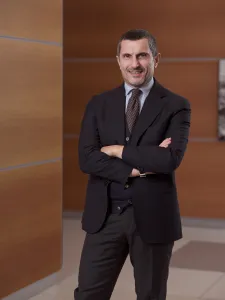
Antonio Ciucci elected New President of our Italian Member Federation ANCE
Antonio Ciucci has been elected as the new President of ANCE during the General Assembly held in Rome on 8 July 2026. He succeeds Federica Brancaccio at the head of the Italian National Association of Builders.
President Ciucci, an engineer from Rome, is Chief Executive Officer of Ircop S.p.A. – a leading Italian construction firm operating nationwide in the sector of major infrastructure, road and rail projects, as well as in public and private construction. He has been actively involved with the Association since the early 2000s, holding various key positions at both regional and national levels, including President of ANCE Roma-ACER.
FIEC wishes all the best to Antonio Ciucci and is looking forward to continuing with him the longstanding constructive cooperation with our Italian Member currently represented in the FIEC Steering Committee by ANCE Vice-President Paola Malabaila.
| Read more |
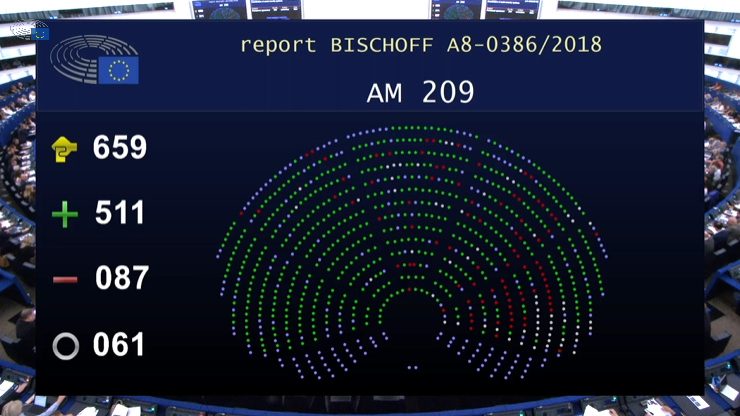
European Parliament approved the revision of social security coordination rules
On 7 July, following years of negotiations, the Members of the European Parliament endorsed the agreement on the revision of the rules on social security coordination (Regulations 883/2004 and 987/2009) with 511 votes in favour, 87 against and 61 abstentions.
The revised regulations ensure fair and clear rules on which country’s security legislation applies for EU workers who live or work in another Member States.
FIEC welcomes in particular the fact that prior notification remains mandatory for all postings in the construction sector, without exemptions for short-term activities, reflecting the specific characteristics of the sector.
After the formal approval of the Council of the EU, the text will be published in the Official Journal of the EU.
| Read more |
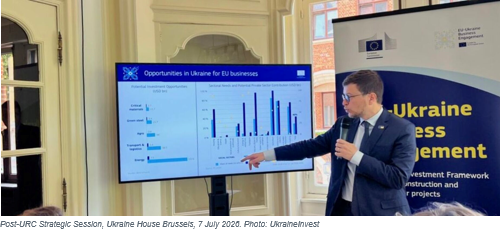
Turning Ukraine’s investment pipeline into concrete projects
On 7 July, FIEC participated in a strategic session organised by the European Commission’s Directorate-General for Enlargement and Eastern Neighbourhood (DG ENEST), together with UkraineInvest, at Ukraine House Brussels. The event brought together representatives of EU Member States and European business associations to examine how private-sector interest in Ukraine can be translated into concrete investments.
The central message was clear: commercially relevant projects and business opportunities exist, while European financing and de-risking instruments are already available. The main challenge is now execution – connecting companies with Ukrainian partners and financial institutions and helping projects become bankable.
The Ukraine Investment Framework is central to this approach. Through guarantees, blended finance, grants and technical assistance, it has so far allocated €8.5 billion in EU support, mobilising €25.7 billion in investment. Its rolling Call for Expressions of Interest allows EU/EEA and Ukrainian companies to submit investment proposals and potentially be matched with relevant financial institutions and support instruments. More than 200 proposals have already been submitted, with strong interest in energy, manufacturing, construction materials, transport and logistics.
The Commission and UkraineInvest also intend to strengthen cooperation with Member States and business associations through sector-specific matchmaking, national outreach and investment roadmaps. For construction companies, potential opportunities include municipal and transport infrastructure, energy projects and construction-material production.
| Read more |

European Commission publishes Sustainability Reporting Standards
Earlier this month, the European Commission adopted two Delegated Acts relevant to EU Sustainability Reporting. FIEC has been actively involved in this process since January 2025 with the publication of the position paper entitled “A pragmatic Omnibus Simplification Package to put the EU at the forefront of Corporate Sustainability while ensuring the Competitiveness of Businesses”.
The Delegated Acts have been submitted to the European Parliament and Member States in the Council for scrutiny. They will enter into force after a period of two months, extendable by a further two months, once they have been published in the Official Journal of the European Union.
| Read more |
EURES report on labour shortages and surpluses 2026
In June, the European Labour Authority released the EURES report on labour shortages and surpluses for 2025. Overall, as in previous report, labour shortages remain widespread across EURES countries. The main factors identified are demographic change, skills mismatch, working conditions and limited labour mobility.
The report also shows that engineering and construction roles continue to be “prominently represented among widespread shortage occupations” which confirms the idea that labour shortages in this sector are structural. In several construction occupations, shortages have even increased, mostly due to the green and digital transitions and the high demand in construction and its supply chains (e.g. roofers, electricians, …). With an ageing workforce, in general in the EU, and particularly in the construction sector, the report highlights the importance of attracting young people and of investing in vocational education and training, apprenticeships and upskilling and reskilling.
| Read more |
Consortium Partners meet to advance Project on Mental Health at Work
On 7 July, Mind@Work consortium partners FIEC, EEI (European Employers Institute) and Fondazione ADAPT, together with associated project partners, convened for their second periodic project meeting. The meeting provided an opportunity to discuss the latest project developments and to define key actions for the months ahead.
A specific focus was placed on the research activities led by partner Fondazione ADAPT, particularly the development of desk research on mental health at work and the related regulatory frameworks. Discussions also covered the continued rollout of interviews with experts at both national and EU level. The desk research and interviews are conducted in framework of the development of a report on mental health at work, expected to be publish beginning of 2027.
In addition, partners confirmed that a first policy brief on mental health at work and the associated challenges posed by a changing labour market will be released by the end of the July.
Altogether, the main aim of the project is to strengthen employers’ role in addressing mental health and psychosocial risks in the workplace.
| Read more |