





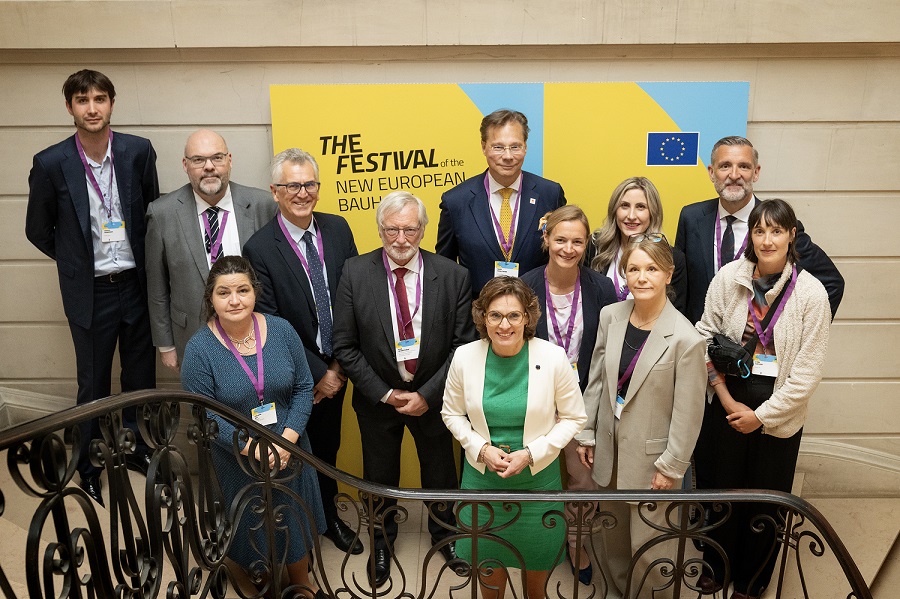
FIEC VP speaks at High Level Stakeholders Dialogue on Circularity
On 9th June, FIEC Vice-President Joël Schons was invited to take part in a Dialogue on “Reduce, reuse, repair, recycle – circularity for sustainable affordable housing”, hosted by Commissioner Roswall. This Dialoque took place in the framework of the New Europe Bauhaus Festival and addressed two aspects of the matter: how to increase the use of circular construction materials for new construction and renovation and how to make better use of existing built space (vacant or underused).Schons highlighted that a major challenge is the economic competitiveness of secondary materials. Deconstruction, sorting, testing, storage and certification generate additional costs, while material markets remain highly price-sensitive.
FIEC therefore supports a Secondary First approach, whereby locally available secondary materials are prioritised whenever technically, environmentally and economically suitable. To make such Secondary First approach effective, policy makers should: establish practical and harmonised End-of-Waste criteria, remove regulatory and administrative barriers to reuse and recycling, support digital visibility of local material flows and available secondary materials, use public procurement to stimulate demand for circular solutions. This pathway is more effective than imposing mandatory quotas, insisted Schons.
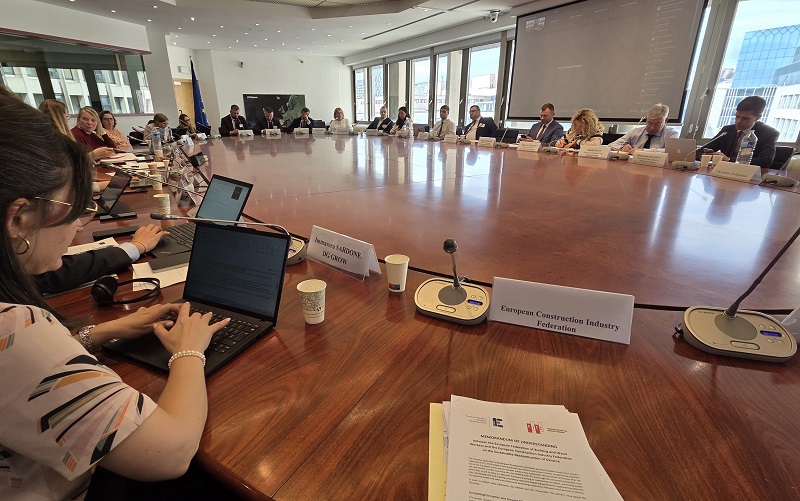
FIEC speaks at High-Level EU-Ukraine dialogue
FIEC was invited to speak at the 9th High-Level EU-Ukraine Dialogue, organised by the European Commission (DG GROW), that took place in Brussels on 8 June, in the presence of Vitaliy Kindrativ, Deputy Minister of Economy, Environment and Agriculture of Ukraine.
The discussions focussed on leveraging private investment in Ukraine and on industrial investment and reconstruction partnerships, with a particular attention to some sectors including construction.
Domenico Campogrande, Director General of FIEC, presented the work undertaken since July 2022 by the FIEC-EIC Task Force “Ukraine” and explained the main reasons which hinder today Western construction companies to go to Ukraine.
Among the main obstacles :
- Security : the situation is still very complicated and the associated risk level is still too high for most companies.
- Financial and commercial risks : there are still too many uncertainties about insurance availability, war-risk coverage, guarantees and payments security.
- Lack of visibility and predictability of tender-ready projects.
- Overall business environment : companies need legal certainty, transparent procurement procedures, reliable contract structures and effective dispute-resolution mechanisms.
- Operational challenges : shortages of labour, logistics constraints, supply-chain disruptions and difficulties in identifying trustworthy local partners.

Technical Report on EU-wide End-of-Waste Criteria to be published soon
On 12 June, the Joint Research Centre (JRC) of the European Commission held a final stakeholder workshop to present the latest developments and discuss stakeholder feedback on EU-wide End-of-Waste (EoW) criteria for mineral Construction & Demolition Waste (CDW). The final technical report is expected to be published shortly. Following its publication, the European Commission may decide to launch a process towards the possible adoption of the proposed criteria.A major challenge remains the economic competitiveness of secondary materials. Deconstruction, sorting, testing, storage and certification generate additional costs, while material markets remain highly price-sensitive. Given the relatively low value of many secondary mineral materials and their limited economically viable transport radius, circular economy policies should avoid imposing disproportionate regulatory requirements.
FIEC therefore supports practical and proportionate EU End-of-Waste criteria for mineral CDW that facilitate the circulation, market uptake and wider use of secondary raw materials across the Single Market.
| Read more |
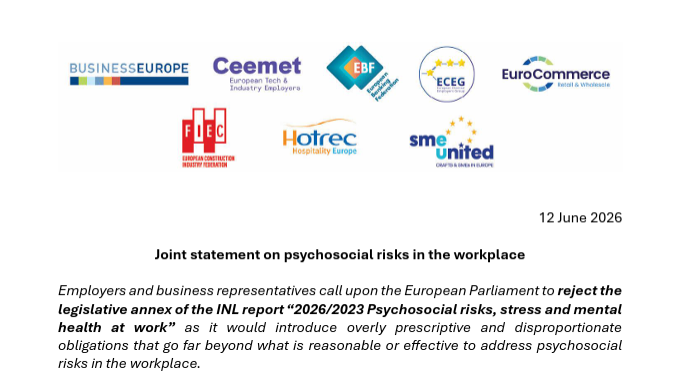
Employers’ joint statement on psychosocial risks in the workplace
| Read more |
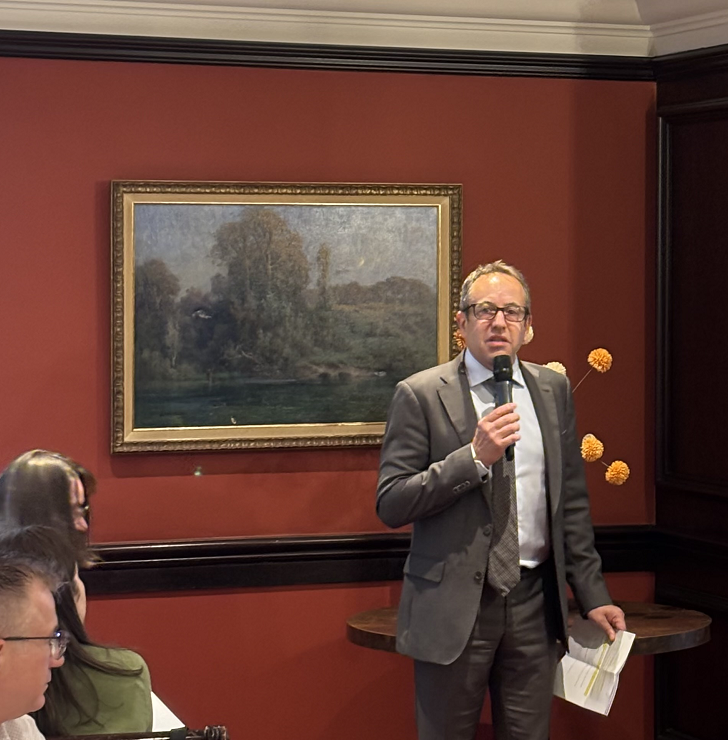
FIEC Director General represented the EEI at the Tripartite Exchange Seminar
On 11 June, Domenico Campogrande, Director General of FIEC, represented the European Employers’ Institute (EEI) at the Tripartite Exchange Seminar (TES) dinner, organised by Eurofound.Domenico Campogrande shared key highlights from the EEI project AI@Work on the impact of AI on people and business management from an employers’ perspective. He presented the main outcomes of the cases studies on the impact of AI on productivity and competitiveness and stresses the importance of deploying tailored and targeted AI tools before upscaling its use. The AI@Work project also highlights the importance of upskilling and reskilling the workforce and the need to invest further on AI tools to remain competitive.
| Read more |
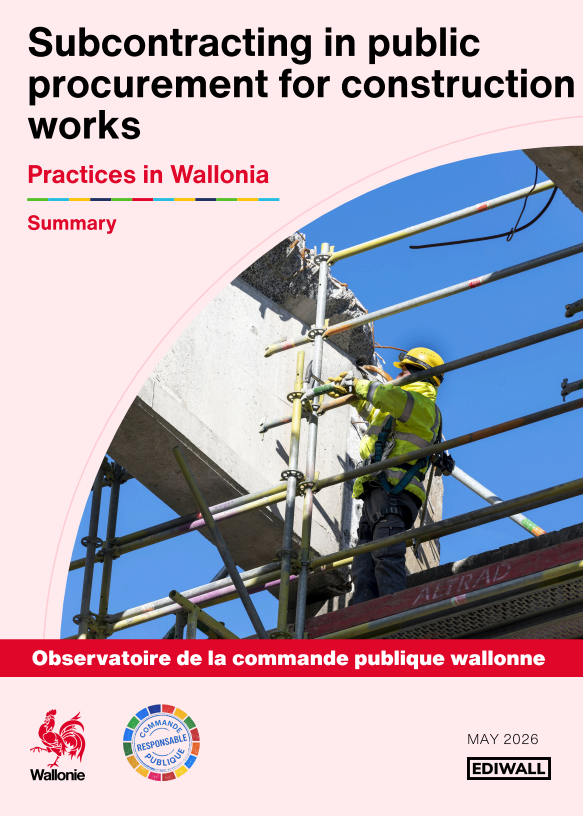
New study published on subcontracting in public procurement for construction works
In May 2026, the KU Leuven and UCL Louvain published a study on “subcontracting in public procurement for construction – practices in Wallonia”, commissioned by the Wallon Public Service.According to the quantitative data analysis operated on the basis of the “declaration of works” database (applicable to “works in immovable property” in 2024), on average, a subcontracting chain in public construction contracts in Wallonia counts 8.5 active companies (the average across the entire subcontracting chain), including 1.2 contractors and 7.3 subcontractors. More than half of the subcontracting chains (50.5%) consist of a maximum of four companies. Approximately 8.6% of the declarations do not include any subcontractors. Two out of three chains have one level of subcontracting, while one out of five chains has two levels. 4.2% reach three levels, and only 0.2% include four levels or more. Regarding the horizontal dimension of the chain, more than three quarters of subcontractors operate at the first level of subcontracting.
For reminder, Belgium has introduced some years ago a legal limitation of subcontracting chains in public procurement to two or three levels and prohibiting purely financial subcontracting.
| Read more |

EU temporarily adjusts Basel III market risk rules
In practical terms, the FRTB is the framework that tells banks how to calculate the capital they need to set aside to cover potential losses caused by changes in market prices.
The revised Capital Requirements Regulation and Capital Requirements Directive (CRR3/CRD6), known as the 2024 banking package, already brought most of the final Basel III standards into EU law from January 2025. The remaining sensitive issue is the market risk framework for trading book activities. The EU had already postponed the application of the FRTB twice, until 1 January 2027, to take account of implementation delays and differences in other major jurisdictions.
As the CRR no longer allows another full postponement, the Commission is not proposing a simple additional delay. Instead, it has adopted an act with temporary targeted adjustments to the market risk framework. The measures are expected to apply for three years from 1 January 2027, until January 2030, and include targeted operational relief as well as a multiplier designed to offset part of the capital impact for EU banks most affected by the new rules.
The objective is to avoid a competitive disadvantage for European banks compared with banks in jurisdictions where the same framework is not yet fully implemented, is delayed, or is being adapted. This is particularly relevant for global trading activities, where regulatory divergence can influence the location and competitiveness of market-making and capital markets services.Why this matters for FIEC
Although this is a technical banking issue, it is relevant beyond the financial sector. A stable, predictable and internationally coherent prudential framework supports the capacity of European banks to finance the real economy. For construction, this matters because investment in infrastructure, housing, energy renovation, industrial capacity and the green transition depends heavily on well-functioning European financing channels.What happens next
The delegated act has been submitted to the European Parliament and the Council for a three-month scrutiny period, which can be extended by another three months. If no objection is raised, the adjusted rules will apply from 1 January 2027 for a three-year period. The Commission will use this period to monitor developments in other major jurisdictions and consider the most appropriate longer-term approach for EU market risk rules.
| Read more |
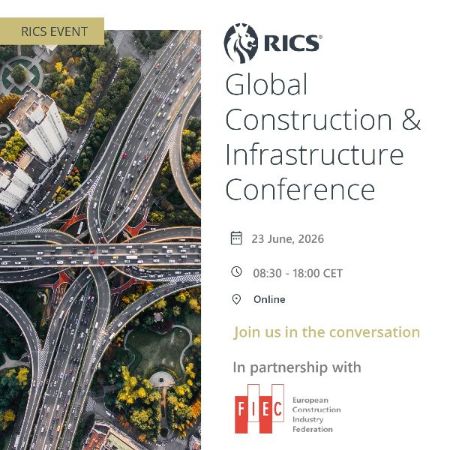
23 June, online: Global Construction & Infrastructure Conference
FIEC is a supporting partner of the upcoming online Global Construction and Infrastructure Conference organised by the Royal Institution of Chartered Surveyors (RICS) on 23 June. Speakers and participants will explore the key forces and trends at play within markets worldwide that must be tackled to prepare the construction sector for the future. Featuring a line-up of keynotes, panel discussions, and in-depth spotlight sessions from leading experts, this year’s programme covers topics such as circular construction, infrastructure management, green investment, bio-based materials, innovations in geothermal energy, smart connectivity, and a guide to AI best practices.This is a good opportunity to hear transformative discussions and debates from the industry community thought leaders’ insights, to deepen your understanding of the pressing challenges facing the sector, and to gain the lessons, tools, and knowledge needed to embrace new technologies, embed sustainable models and projects, and navigate the complexities of a rapidly changing industry.
Download or view conference programme via the tab below. For additional information and the expected learning outcomes, visit this webpage. About RICS.
| PROGRAMME |