



FIEC and EFBWW joint position on the Construction Services Act
FIEC and EFBWW, the European Social Partners for Construction, published a joint position on the forthcoming Construction Services Act. FIEC and EFBWW stress that the construction industry cannot be compared to other sectors and have some doubts on the added value of such initiative. Jointly, they call for the respect of occupational safety and health (OSH) standards and insist that mutual recognition of skills and qualifications, but also from certificates, is welcome but should not undermine national standards and VET systems.On social ID cards, they reiterate the conclusions of the SIDE-CIC project: the European Commission should promote efforts towards interoperability rather than harmonising existing schemes. Finally, FIEC and EFBWW call for a better cooperation between paritarian institutes and for improving the attractivity of the sector.
| Read more |
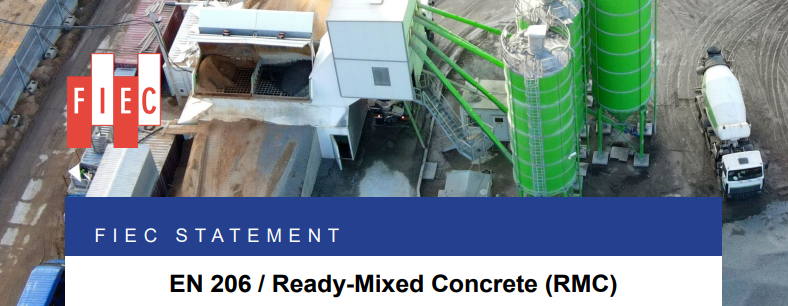
New EU Product Standard for Ready-Mixed Concrete (RMC): FIEC warns of immense costs and risks to quality and safety
On 3 June, FIEC published a statement on EN 206, the Ready-Mixed Concrete (RMC) standard. The construction industry, and contractors in particular, are highly concerned about ongoing harmonisation activities that would undermine the existing integrated system for concrete, which has long ensured safety, durability, and sustainability while balancing responsibilities across the value chain.A key concern for contractors is that the European Commission’s approach could lead to disruptions in the value chain: Manufacturers would only provide information on selected properties of RMC. In addition, the European Commission aims to reduce the testing burden on manufacturers and shift it, through Member State regulations, to construction sites. This would impose significant additional administrative, technical, and financial burdens on contractors.
Moreover, RMC must be considered within a full system perspective. It is a semi-finished construction product whose final performance is not determined solely at the point of delivery, but depends equally on placement, curing, and execution on site. The harmonisation approach proposed by the European Commission risks an internally inconsistent framework and legal uncertainty.
FIEC remains committed to constructive dialogue with the European Commission and calls for a thorough evaluation of the necessity, benefits, and consequences of harmonising the RMC product standard before further technical work progresses.
| Read more |
FIEC replies to Commission’s biased questionnaire on subcontracting practices
As the European Commission is in the process of preparing the Quality Jobs Act, to be due at the end of the year, a questionnaire targeting subcontracting practices has been disseminated amongst stakeholders, showing the clear interest of the Commission to address this issue in the framework of the forthcoming Act.FIEC sent its contribution to the European Commission in the form of a general statement as the way questions are formulated (i.e. mostly based on negative assumptions) did not allow for proper answers.
In its reply, FIEC stresses again the importance played by subcontracting schemes in the construction industry, a fragmented industry, mostly composed of specialised SMEs, and the fact that imposing a one-size-fits-all legislation at the EU level would not be the right approach. National rules already exist and are better suited to the specific realities of each Member State – some of them derive from agreements by national sectoral social partners, whose autonomy and competency must be respected.
Be it in the area of liability mechanisms or health and safety rules on site, FIEC points out that the way forward lies in the proper enforcement of the existing EU and national rules, which are already very advanced and comprehensive when it comes to OSH rules.
As the Commission is also trying to define what “high risk” sectors are, FIEC strongly regrets that any high labour intensity sector seems to be presumed to be “high risk”.
| Read more |
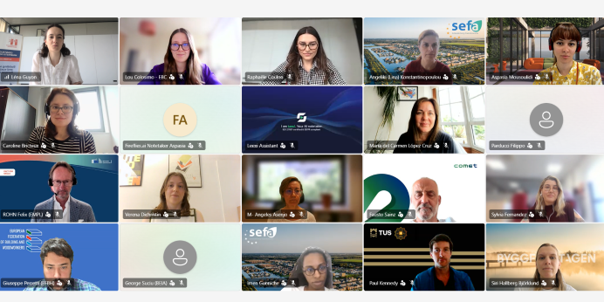
Pact for Skills in Construction: meeting with Pact Signatories
On the 3rd of June 2026, the Pact for Skills in Construction coordinators, the European Construction Industry Federation (FIEC), the European Federation of Building and Woodworkers (EFBWW), and the European Builders Confederation (EBC), gathered alongside its Pact signatories for the first meeting of 2026. Highlights included the presentation of the 2025 Large Scale Partnership (LSP) annual survey results. In addition, the first results and key takeaways from the Pact for Skills in Construction 2026 survey were presented, with a consolidated report expected by the end of the year.An update was given on the Construction Blueprint 2 project, showcasing key milestones reached: the publication of an urgent Skills Report addressing the digital and green transition, progress on pilot training courses, and the launch of an interactive map to collect and share good practices in skills development. Signatories were invited to submit expressions of interest to join the piloting of short training courses, reinforcing the collaborative and action-oriented spirit of the Pact.
The meeting also demonstrated its strength as a platform for best practices exchange, with an intervention by Byggföretagen, our Swedish member Federation, who shared inspiring initiatives to attract women into the construction sector.
Updates on the promotional activities of the Pact were shared alongside a forward-looking overview of upcoming EU initiatives, including the VET Strategy and the Skills Portability Initiative, expected in the second half of 2026.
With the next Pact for Skills in Construction meeting set for autumn 2026, the Pact is well placed to serve as a key platform to advance the sector’s skills agenda and build on its growing momentum.
| Read more |
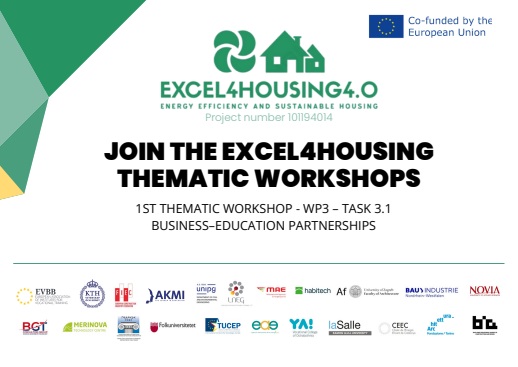
EXCEL4HOUSING 4.0: Thematic Workshop opportunity on “Skills & labour market needs in construction”
On 23 June (11:00-13:00 CET), the EXCEL4HOUSING4.0 project consortium will host its first Thematic Workshop on Skills & Labour Market Needs in Construction (online meeting).The event will bring together industry professionals, educators, and policy stakeholders from across Europe to address one of the sector’s challenges: the growing gap between available skills and the needs of a rapidly evolving construction and housing sector. The workshop is designed as a joint forum where participants can validate current and future skills gaps and identify priority training needs. Discussions will focus on supporting the transition of the European construction and housing sector toward greener, more digital, and circular practices. A transformation that demands new professional profiles and updated training pathways.
Whether you represent a construction company, a sector association, or a labour market body, this is a unique opportunity to participate in the shaping of the future of construction education across Europe and connect with the EXCEL4HOUSING4.0 stakeholder community.
| Read more |
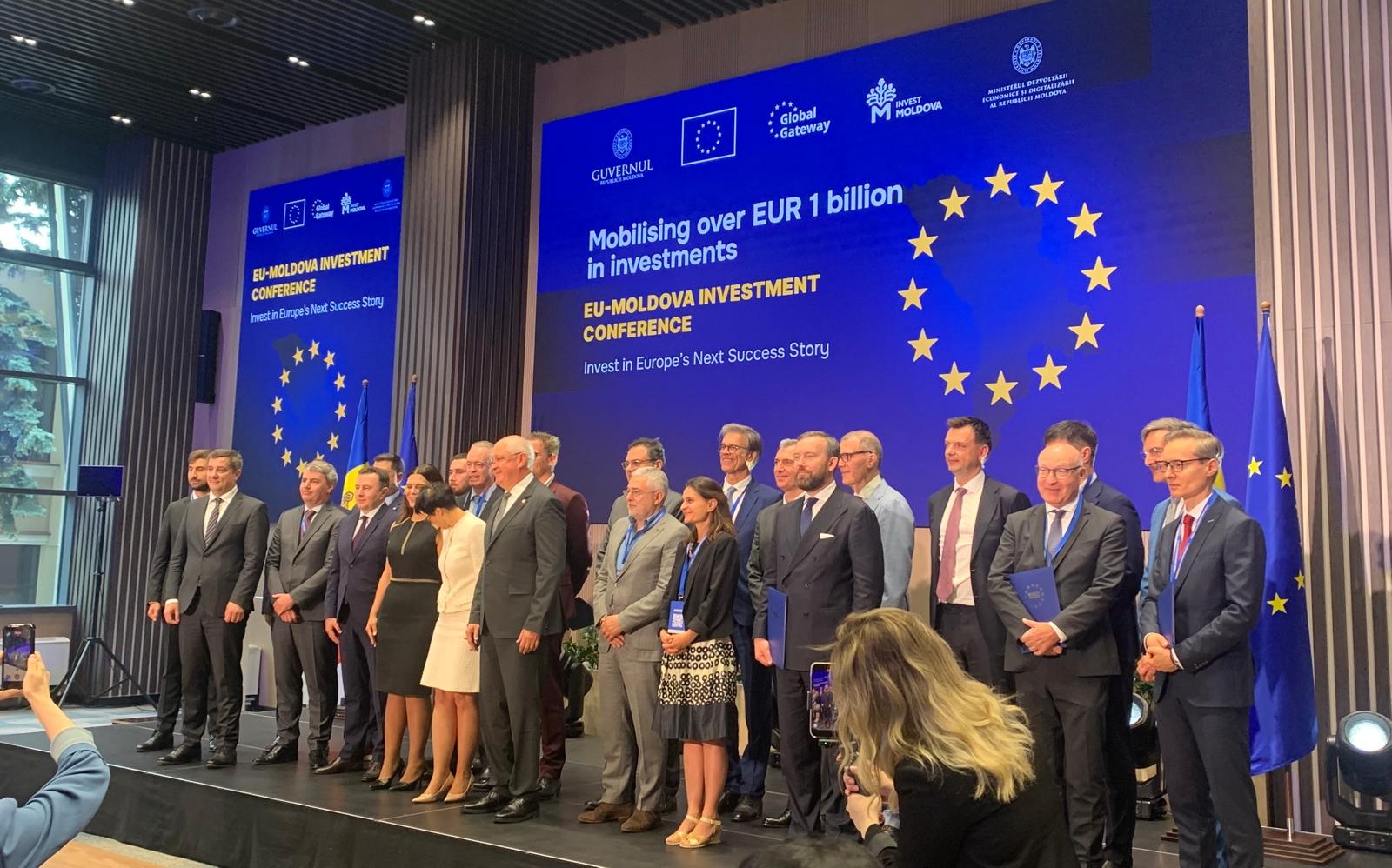
EU-Moldova Summit in Chișinău announces up to €641 million in investments
On 4 June, the EU–Moldova Investment Summit took place in Chișinău (Moldova), bringing together European institutions, Moldovan authorities, international financial actors and business representatives. The event, organised by the European Commission and the Government of Moldova, aimed to boost investment, accelerate economic integration and support Moldova’s path towards EU accession.The summit focused on the implementation of the EU’s Growth Plan for Moldova and the mobilisation of public and private investment in key sectors such as infrastructure, energy and construction. Discussions highlighted the importance of reforms, improved business conditions and the alignment of Moldova with EU standards as essential steps in the accession process.
Representing FIEC, Laurentiu Plosceanu, President of ARACO, one of the two FIEC’s Romanian members, participated in the summit discussions. His presence underlined the strong engagement of the European construction sector in Moldova’s development.
In her keynote address, EU Commissioner for Enlargement, Marta Kos, described Moldova as a “top performer” in the EU accession process, highlighting the country’s progress in reforms and its commitment to closer integration with the European Union. “The investment projects announced today demonstrate that Moldova is not only strongly supported by the European Union, but is also a country that is contributing to Europe’s competitiveness, security, digital transformation and industrial development“, remarked the Commissioner.
Speaking on behalf of ARACO and FIEC, Mr Plosceanu emphasised the readiness of the sector, stating that “there are already a number of construction companies that are ready – and getting prepared – for the launch and implementation of EU-funded Moldavian projects on a medium- and long-term approach.”
The summit confirmed the strategic role of the construction industry in delivering EU-funded investments and supporting Moldova’s economic transformation. It also reinforced the importance of continued cooperation between European stakeholders and Moldovan partners to ensure sustainable growth and successful integration into the EU market.
Next steps
On 22 June, the EU and Moldova will hold the second EU-Moldova Summit, reaffirming the strategic importance of Moldova’s future within the EU and the strength of our cooperation.
| Read more |
80th Anniversary of ANCE
This year, FIEC’s Italian member federation, ANCE (Associazione Nazionale Costruttori Edili), turns 80 years, a particularly significant anniversary as it coincides with the 80th anniversary of the Constituent Assembly of Italy (known as Constitution of Italy of 1946).”Those were years of profound political and social transformations that fostered the codification of the fundamental principles upon which our Republic is founded and which served as a source of inspiration for all public and private entities that emerged in those years“, remarked ANCE President, Federica Brancaccio, and continued – “This spirit also inspired the founding of the National Association of Building Contractors on 5 May 1946. Its bylaws (statute) include, among their objectives, the promotion of respect for constitutional values regarding the protection of labour, individuals, the environment, and freedom of economic initiative, also in the interest of future generations. These are values that must be kept firmly in mind in our daily activities, both as entrepreneurs and as representatives of a representative association (…).”
FIEC wishes ANCE a Happy Birthday and best success on the upcoming celebration initiatives foreseen for this special anniversary.
| ABOUT ANCE |
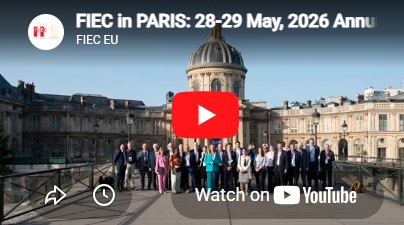
Highlights of the FIEC event in Paris on 28-29 May 2026
A video story of the 2-day event co-hosted in Paris by FIEC together with its 2 French member federations: Fédération Française du Bâtiment (FFB) and Fédération Nationale des Travaux Publics (FNTP).The Annual Conference & General Assembly took place on 29 May, at the Institut de France, while the festive soiree of 28 May took all participants onboard the Paquebot cruising the River Seine.
| WATCH VIDEO |