



“The Future of Circular Economy: the value of secondary raw materials” – Parliamentary Breakfast
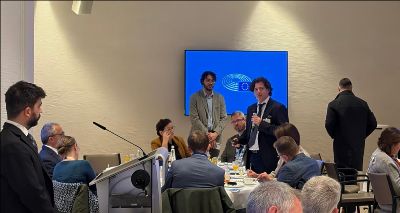
On 20 November, FIEC Vice-President Stephanos Pierides (CY) took part in a Parliamentary Breakfast hosted by Member of the European Parliament, Michalis Hadjipantela (EPP, Cyprus), and addressing the importance of secondary materials for the circular economy, ahead of the forthcoming Circular Economy Act.
Construction and Demolition Waste (CDW) is the largest waste stream in the EU, putting the construction sector at the heart of the EU’s circular objectives. The discussion was particularly timely for contractors, as EU End-of-Waste criteria for mineral CDW are being developed and will shape how easily secondary materials can be used on site. Participants called for a policy framework that encourages recycling and the use of secondary materials, while recognising that virgin materials are still needed.
As the European Commission prepares the Circular Economy Act, FIEC remains committed to supporting a practical and coherent framework that enhances competitiveness, reduces reliance on virgin raw materials and enables the construction sector to contribute effectively to Europe’s circular economy objectives.
In 2024 and together with European International Contractors (EIC) and ENCORD, FIEC released a publication to disseminate the vision on circularity in the construction ecosystem. Click here to read or download the document.

European Employers’ Institute Annual Conference
On 19 November in Brussels, the European Employers’ Institute (EEI) held its 2nd Annual Conference,
The event brought together members of the EEI, representatives from European institutions and other stakeholders. The conference contributed to the debate around the upcoming Quality Jobs Act in highlighting the results of two recent EEI studies on the legal and policy frameworks governing vocational training and occupational safety and health.
The debates were organised around two round table discussions, one on skills and competitiveness and the other one on Occupational Safety and Health (OSH) and in particular on how to adequately take extreme temperatures into account.
Speakers in both panels stressed the importance of respecting national competences and local specificities while recognising the importance of the European Commission to support implementation and enforcement, develop guidance and provide fundings.
| Read more |
“Pact for Skills in Construction”: signatories meet online
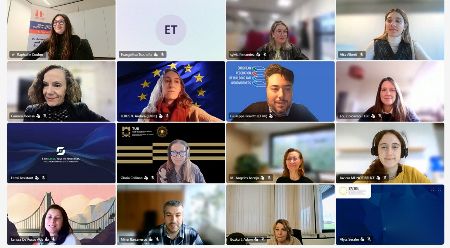
On 18 November, the “Pact for Skills in Construction” coordinators, FIEC, the European Builders Confederation (EBC) and the European Federation of Building and Wood Workers (EFBWW), hosted an online meeting with the pact signatories.
The session opened with a presentation by Andrea Leruste (European Commission, DG EMPL, Deputy Head of Unit) on the European Commission’s Vocational Education and Training (VET) strategy and the Skills Portability Initiative. Participants then received an update on the Construction Blueprint 2 project. It covered progress on the Skills Observatory survey, the development of the Urgent Skills Report and the roll-out of the pilot training courses, as well as a training module developed on insulation strips.
A key highlight was the presentation of Welcome Work, the EU-funded project recognised as a best practice in integrating refugees into the construction labour market. The meeting also looked ahead to forthcoming EU initiatives: the Construction Services Act and the European Skills Guarantee.
With a next meeting foreseen for Spring 2027, the pact continues to grow as a community committed to support in the upskilling and reskilling of the construction workforce.
| Read more |

Industrial Forum: focus on Public Procurement
The 2nd plenary meeting of the Industrial Forum (coordinated by DG GROW of the European Commission), in which FIEC represents the construction industry, took place on 18 November and dealt largely with the proposed Regulation on Public Procurement.
The discussions addressed, among others, the issue of the legislative instrument (Regulation vs Directive) and its implementation time and related costs, the proposed quality award criteria, the provisions about the EU preferences. The European Commission also highlighted the various elements of simplification proposed in the Regulation and how the latter will help in avoiding “gold-plating”.
Approximately 30% of public procurement in the EU is related to construction activities and therefore this topic will remain among the top priorities for FIEC during the next months.
| Read more |

E-Declaration: final approval by EU Council
On 19 November, the Council of the EU has formally adopted the Regulation on a public interface connected to the Internal Market Information System for the Declaration of posting of workers and amending Regulation (EU) No.1024/2012.
This was the last step of the legislative process for the E-Declaration. The legislative will now enter into force three months after its publication in the EU Official Journal.
FIEC welcomes this adoption and calls on the European Commission and Member States for a swift implementation of the E-Declaration.
| Read more |

2nd Policy Workshop of AI@Work project
On 17 November, FIEC attended the 2nd Policy Workshop organised in the context of the EU-funded project AI@Work.
AI@Work is the EU-funded project of the European Employers’ Institute (EEI), which objectives are to support European and national sectoral employers’ representatives in getting a better understanding of the impact on AI on skills, people and companies. The workshop took place at the German Economic Institute in Köln, and brought together representatives of national and european employers’ organisations, researchers from the German Economic Institute (IW) and IFAA (Institut für angewanangewandte Arbeitswissenschaft).
The research team presented the presented the results of a survey on the implementation and use of AI in companies across Europe, and the outcomes of an analysis of job postings. In the construction sector, companies primarily use AI for development, research and production. AI can provide a competitive advantage in terms of cost efficiency and productivity, but also for risk management and compliance.
However, the survey shows that construction companies face barriers to implementing AI, such as budget constraints, and technology or infrastructure limitations.
The project will run until April 2027.
| Read more |

“European Education and Skills Summit” to implement new EU VET Strategy
On 20 November, the European Commission held the largest-ever European Education and Skills Summit in Brussels, as part of the European Skills and Vocational Educational Training Week (VET). Hosted by Executive Vice-President Roxana Mînzatu, the event brought together Education Ministers from seven Member States, Members of the European Parliament, teachers, students, social partners and EdTech innovators.
The summit launched implementation of the European Commission’s Education and Skills package, presented on 5 November, which includes the new European VET Strategy for 2026-2030. Under the overall theme of preparing schools for the age of artificial intelligence, the discussions focused on four themes: basic skills, the teaching profession, digital transformation and strengthening vocational education and training. Including VET as a theme shows its growing place on the EU agenda at a time when skills shortages are rising in sectors linked to vocational training, including construction.
Mînzatu stressed that strong education systems are essential to Europe’s competitiveness, security and democratic resilience. For construction, the same is true of vocational training, and the VET strategy will only succeed if industry is closely involved in putting it into practice.
| Read more |

Save the date, 14 December:
Joint Webinar on CO2 emissions assessment in public works
A Comparative Study commissioned by FIEC, EIC (European International Contractors) and EuDA (European Dredging Association), was released by the 3 organisations last 15 October.
The study focuses on the CO2 emissions methodologies used or proposed across Member States to measure and evaluate emission reductions in public works tenders, both for infrastructure and building works. It aims to inform decision-makers about practical approaches and to feed into the ongoing discussions on the new proposed EU legislative framework for Public Procurement.
To present the results, FIEC, EIC, EuDA are organising a joint Webinar (online) on 14 December (10h00-12h30 CET). Registration is free and already open.
The Comparative Study is available on FIEC Website.
Read the Press Release jointly issued by FIEC, EIC and EuDA.
| REGISTRATION |